




Maintaining clean and safe floors is a key part of facility management whether in commercial buildings, warehouses, hospitals, or shopping malls. As hygiene standards continue to rise, traditional manual cleaning methods often fall short in efficiency and consistency.
This is where scrubber dryers, also known as automatic floor cleaning machines, become essential. These machines not only scrub and dry floors simultaneously but also help reduce labor costs and improve overall cleaning productivity.
In this article, we’ll explore what a scrubber dryer is, the main types available, and most importantly, how to choose the right model based on your facility’s floor type and cleaning coverage
What Is a Scrubber Dryer?
A scrubber dryer (often simply called a scrubber) is an automatic floor cleaning machine designed for scrubbing and drying floors in a single operation. Depending on the model, it can be either walk-behind or self-propelled/ride-on.
Scrubber dryers clean floors by combining:
- Mechanical action: one or more rotating brushes or abrasive pads scrub the floor surface.
- Chemical action: a solution of water and detergent helps loosen dirt and stains.
The machine’s solution tank holds clean water mixed with detergent. While moving forward, the machine dispenses this solution near the brushes. The brushes agitate and remove the dirt mechanically, while a rear squeegee collects the dirty water. A built-in vacuum system then sucks the waste liquid into the recovery tank, leaving the floor clean and dry all in one pass.
Types of Scrubber Dryers
There are two main types of scrubber dryers, depending on how they are operated:
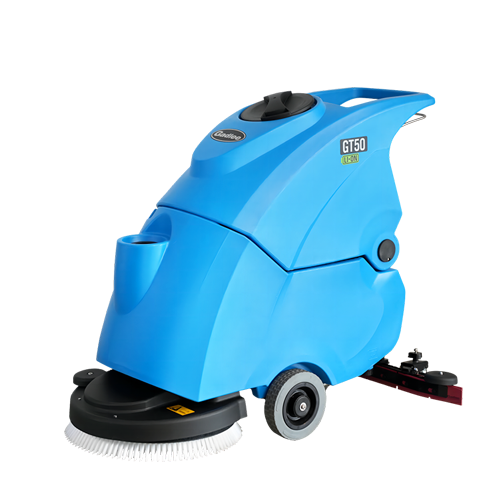
1. Walk-Behind Scrubber Dryers
The operator walks behind the machine and guides it manually.
These are ideal for small to medium-sized areas such as shops, schools, and corridors.
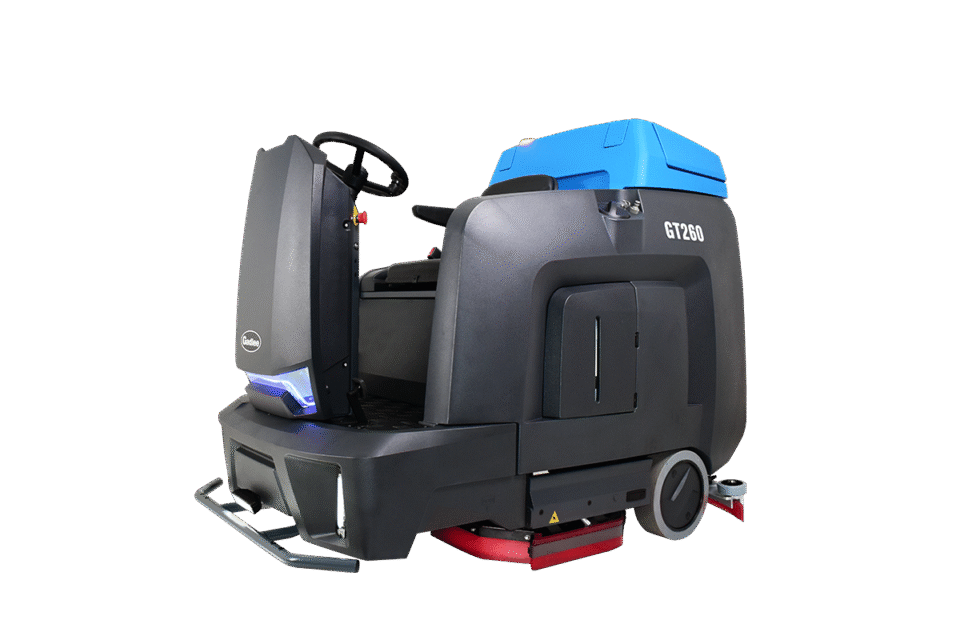
2. Ride-On Scrubber Dryers
The operator rides on the machine and drives it like a small vehicle.
They are designed for large areas such as warehouses, airports, and parking facilities, offering greater productivity and coverage.
Recommended Floor Types for Scrubber Dryers
Scrubber dryers are suitable for cleaning a wide range of indoor floor surfaces, including:
- Ceramic or tile floors
- Marble and natural stone
- Concrete floors
- Linoleum or vinyl floors
- Stud tile floors
- Glazed stoneware floors
Some heavy-duty models can also be used for outdoor hard surfaces, depending on their brush type and protection rating.
What to Look for in “Cleaning Coverage”
Cleaning coverage refers to how much floor area a machine can clean within a given time, usually expressed in square meters per hour (m²/h).
This is one of the most important performance indicators when choosing a scrubber dryer.
Key Factors Affecting Cleaning Coverage
- Cleaning Path / Working Width
The wider the scrub path, the more floor area the machine covers per pass.
- Machine Speed / Productivity
Higher travel speed allows the scrubber to clean more square meters per hour.
- Tank Capacity and Run Time
Larger solution and recovery tanks mean fewer interruptions for refilling or draining, enabling continuous cleaning.
- Brush Head Design and Down Pressure
Better brush pressure improves deep cleaning, often reducing the number of passes needed increasing effective coverage.
- Maneuverability
In tight or obstacle-filled spaces, compact and agile machines may achieve higher real-world coverage even with smaller working widths.
How to Select the Right Scrubber Dryer Based on Coverage
The ideal scrubber dryer depends on your facility size and floor layout:
For coverage under 2,000 m²/h →
A compact walk-behind scrubber dryer is usually sufficient for small or medium areas.
For coverage of 3,000–5,000 m²/h and above →
Choose a wide-path walk-behind or ride-on model to handle large open areas efficiently.
For example, Gadlee classifies its scrubber dryers by productivity range and application type from small retail stores to large industrial facilities.
Conclusion
A scrubber dryer is an essential cleaning solution for maintaining hygiene and efficiency in modern facilities.
By evaluating floor type, area size, and required coverage, you can select the right machine that delivers optimal cleaning performance and long-term value.
When comparing options, always check manufacturer’s specifications for:
- Productivity (m²/h)
- Tank capacity
- Running time
- Noise level
- Maintenance requirements
Choosing the right scrubber dryer ensures cleaner floors, reduced labor costs, and improved operational efficiency across your facility.
 English
 Chinese
 German
 French
 Spanish
 Japanese